The Science Behind Flux Ovens and Their Role in Modern Manufacturing
Understanding Flux Ovens
What is a Flux Oven?
Flux ovens stand as essential tools in the welding industry, designed specifically to preheat and maintain welding flux at optimal temperatures. Manufacturers rely on these devices to ensure flux remains dry and effective, preventing moisture absorption that could compromise weld quality. A flux oven typically resembles a sturdy box or cabinet, equipped with heating elements that circulate warm air evenly. In modern manufacturing, welders use flux ovens to store and condition flux for processes like submerged arc welding, where consistent flux performance directly impacts the strength and integrity of the weld. These ovens come in various capacities, such as 100 lb or 200 lb models, allowing flexibility for different production scales. By controlling temperature precisely, often around 550F, flux ovens eliminate risks like porosity in welds caused by damp flux. Leading brands like Gullco produce reliable flux ovens that integrate seamlessly into welding workflows, supporting automation and high-volume output. Engineers appreciate how these ovens enhance efficiency, reducing downtime and ensuring inventory stays ready for immediate use. Without a proper flux oven, manufacturing lines face delays, underscoring their role in streamlined operations.
Key Components of Flux Ovens
Flux ovens feature several critical components that work together to deliver precise heating and storage for welding flux. The outer shell, often made from durable steel, houses the internal heating elements powered by watts-rated coils that generate consistent heat. Inside, shelves or trays hold flux containers, while a fan system ensures even distribution of warm air, preventing hot spots. Temperature controls, including digital thermostats, allow operators to set and maintain levels like 550F, vital for flux heating in submerged arc welding. Many models include a cart base for easy mobility around the shop floor, integrating with welding machines effortlessly. Feedback mechanisms, such as sensors, monitor internal conditions and adjust power output automatically. Doors with secure latches keep heat contained, and some advanced units offer inventory tracking features to manage flux stock. Manufacturers like Gullco emphasize robust engineering in these components, ensuring longevity and safety. Welders benefit from these elements, as they guarantee flux stays dry and granular, ready for feeding into the weld wire path. Overall, the synergy of these parts makes flux ovens indispensable for high-quality manufacturing.
How Flux Ovens Work in Welding
Flux ovens operate by preheating welding flux to remove moisture, ensuring it performs flawlessly during the welding process. Operators load flux into the oven's compartments, set the temperature—commonly 550F—and allow the heating elements to warm the interior gradually. Powered by efficient watts usage, the oven circulates air to dry the flux evenly, preparing it for use in submerged arc welding where flux covers the electrode and wire. This process shields the weld pool from atmospheric contamination, producing clean, strong joints. In modern setups, flux ovens connect to automated welding machines, feeding conditioned flux directly into the system via hoppers or carts. The feedback loop in the oven adjusts heat based on real-time readings, maintaining stability even during extended runs. Manufacturers integrate these ovens to boost productivity, as dry flux reduces defects like cracks or inclusions in the weld. Brands such as Gullco design their flux ovens for seamless workflow, allowing welders to focus on precision rather than preparation. Diesel-powered mobile versions even support field operations, expanding their utility beyond factory floors. Ultimately, flux ovens transform raw flux into a reliable asset, driving manufacturing excellence.
Types of Flux Ovens in Modern Manufacturing
Variations of Flux Ovens
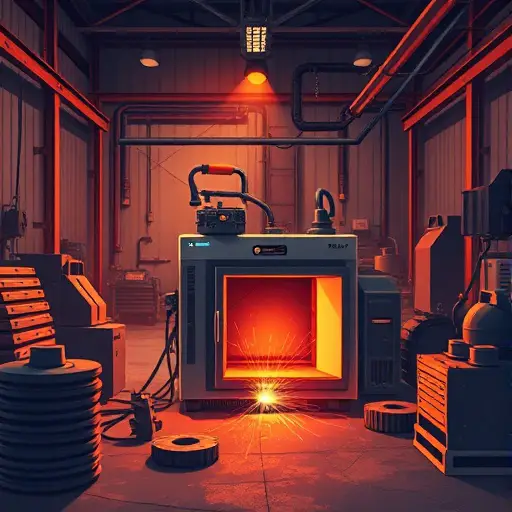
Flux oven variations cater to diverse manufacturing needs, from compact benchtop units to large industrial models. Basic flux ovens function as simple heated boxes for small-scale welding, while advanced versions incorporate digital controls and larger capacities like 100 lb or 200 lb. Some feature wheeled carts for portability, ideal for moving between welding stations. In submerged arc welding, low-profile ovens sit flush with machines, ensuring smooth flux delivery to the electrode. Manufacturers offer explosion-proof designs for hazardous environments, and others include humidity sensors to monitor flux conditions proactively. Flux oven variations also differ in power sources—electric models dominate shops, but diesel variants suit remote sites. Engineering innovations allow stackable configurations, optimizing space in crowded facilities. Leading brands provide customizable options, such as adjustable shelves for different flux granule sizes. These adaptations address flux heating challenges, ensuring welders maintain high standards. Inventory management improves with ovens that track usage, preventing shortages. Overall, the range of flux oven variations empowers manufacturers to match equipment to specific production demands, enhancing efficiency across operations.
Comparative Analysis of 100 lb vs 200 lb Ovens
Comparing 100 lb and 200 lb flux ovens reveals key differences in capacity, efficiency, and application within manufacturing. The 100 lb flux oven suits smaller operations or intermittent welding tasks, holding enough flux for daily needs without overwhelming space. It heats quickly, often reaching 550F in under an hour, and consumes fewer watts, lowering energy costs for budget-conscious shops. In contrast, the 200 lb model excels in high-volume submerged arc welding, storing more flux to support continuous production lines and automation. Larger heating elements ensure uniform temperature across bigger loads, though it draws more power and requires sturdier carts for mobility. Feedback systems in both monitor performance, but the 200 lb version often includes advanced diagnostics for precise control. Manufacturers like Gullco offer both, with the 100 lb ideal for prototyping and the 200 lb for mass production. Welders note the 100 lb's ease of handling reduces physical strain, while the 200 lb minimizes refill frequency, cutting downtime. Cost-wise, the smaller oven proves more affordable upfront, but the larger delivers better ROI in intensive settings. Choosing between them hinges on workflow scale, making this analysis crucial for optimized manufacturing.
Leading Brands: Gullco and Others
Gullco emerges as a top brand in flux ovens, renowned for durable engineering and reliable performance in welding environments. Their models, available in 100 lb and 200 lb capacities, feature robust heating systems that maintain 550F steadily, supporting submerged arc welding with precision. Gullco ovens integrate feedback controls to optimize watts usage, reducing energy waste while ensuring flux stays dry. Other leading brands, like those from ARCON or BWS, offer competitive alternatives with innovative designs, such as modular carts for easy transport. These manufacturers emphasize safety features, including insulated boxes to prevent burns and overload protection. In global manufacturing, Gullco's reputation stems from consistent quality, serving industries from shipbuilding to pipeline construction. Competing brands focus on automation compatibility, allowing flux ovens to sync with welding machines seamlessly. Welders praise Gullco for low maintenance and long lifespan, often outlasting generic options. Inventory from these brands ensures quick flux heating, vital for deadlines. Diesel-powered variants from select makers extend utility to off-grid sites. Ultimately, selecting from Gullco and peers guarantees manufacturers access to proven technology that elevates welding outcomes.
The Science of Heating in Flux Ovens
Temperature Control Mechanisms
Temperature control mechanisms in flux ovens rely on sophisticated thermostats and sensors to sustain ideal conditions for welding flux. These systems use proportional-integral-derivative (PID) controllers to regulate heat output, preventing fluctuations that could affect flux quality. Operators set targets like 550F, and the mechanism activates heating elements only as needed, conserving watts. Bimetallic strips or thermocouples provide real-time feedback, adjusting power to maintain stability even with door openings. In advanced models, digital interfaces allow precise programming for different flux types, ensuring uniform drying across the oven's interior. This science underpins efficient flux heating, as consistent temperatures remove moisture without degrading the flux's chemical properties. Manufacturers engineer these controls for durability, resisting shop vibrations and dust. Welders depend on them during submerged arc processes, where even minor variations lead to weld imperfections. Integration with automation amplifies their role, linking oven status to overall machine feedback. Safety interlocks shut down heating if anomalies arise, protecting users. Overall, these mechanisms transform flux ovens into scientific powerhouses, driving manufacturing precision and reliability.
The Role of Watts in Heating Efficiency
Watts play a pivotal role in the heating efficiency of flux ovens, determining how quickly and effectively they prepare welding flux. Higher wattage ratings accelerate warmup times, reaching 550F faster for urgent production runs, while lower settings suit maintenance heating to save energy. Efficient flux ovens balance watts with insulation quality, minimizing heat loss and maximizing flux drying. In submerged arc welding, optimal watt usage ensures flux flows smoothly onto the electrode and wire, enhancing weld penetration. Engineers calculate watt requirements based on oven size—100 lb models typically need 1,000-2,000 watts, versus 3,000+ for 200 lb units. Feedback systems modulate power dynamically, ramping up during loads and idling otherwise. This approach cuts operational costs, appealing to manufacturers focused on sustainability. Brands like Gullco optimize watt distribution through even coil placement, reducing hotspots. Welders monitor consumption to avoid overloads, especially in cart-mounted ovens shared across stations. Diesel hybrids supplement electric watts in remote setups, broadening applications. Ultimately, mastering watts in flux ovens boosts efficiency, ensuring manufacturing processes run smoothly without excess expenditure.
Feedback Systems for Optimal Performance
Feedback systems in flux ovens monitor and adjust operations in real time, guaranteeing optimal performance for flux heating in welding. Sensors detect temperature deviations and relay data to the control unit, which fine-tunes heating elements to stabilize at 550F. This closed-loop design prevents overcooking flux, preserving its granular structure for submerged arc applications. Visual displays show status updates, allowing welders to verify readiness before loading into machines. Advanced feedback incorporates humidity probes, alerting users to moisture risks in inventory. Manufacturers integrate these systems with automation, syncing oven output to welding machine demands. In 200 lb models, multi-zone feedback ensures even heating across large volumes, unlike simpler 100 lb units. Gullco and other brands emphasize robust algorithms that learn from usage patterns, enhancing long-term efficiency. These systems reduce manual checks, freeing operators for core tasks like weld monitoring. Safety features trigger alarms for faults, such as watt surges. On earth-moving equipment production lines, reliable feedback minimizes defects, upholding quality. Flux ovens with superior feedback stand out, revolutionizing how manufacturers achieve consistent, high-stakes results.
Applications of Flux Ovens in Welding
Submerged Arc Welding Processes
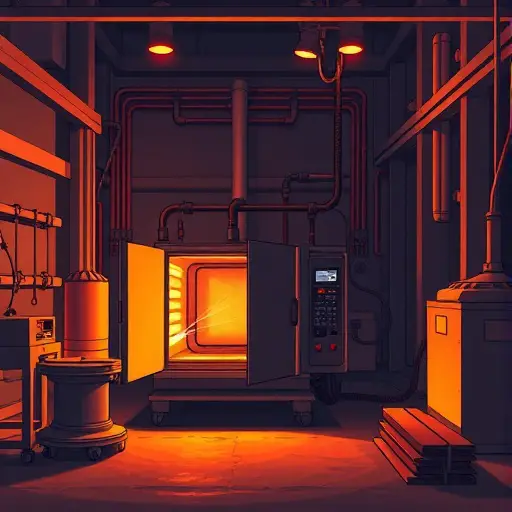
Submerged arc welding processes heavily depend on flux ovens to deliver pre-conditioned flux that shields the arc and molten metal. In this method, granular flux blankets the weld area, reacting with impurities to form slag that protects the joint. Flux ovens maintain the material at 550F, eliminating absorbed moisture that could cause explosive spatter or weak welds. Manufacturers position ovens near welding machines, using carts to transport hot flux efficiently. Automation streamlines the feed, where conditioned flux mixes with wire and electrode for seamless operation. High-capacity 200 lb ovens support continuous runs in heavy fabrication, like pressure vessels or beams. Welders adjust flux based on joint type, relying on oven feedback for consistency. Brands like Gullco design ovens tailored for submerged arc, with features that prevent clumping. This integration cuts preparation time, boosting throughput in modern plants. Diesel-powered ovens enable on-site welding for infrastructure projects. Overall, flux ovens elevate submerged arc welding, ensuring durable, defect-free results critical to manufacturing integrity.
The Importance of Flux in Welding
Flux holds immense importance in welding, acting as a protective agent that cleans surfaces and stabilizes the arc for superior bonds. In processes like submerged arc welding, it deoxidizes metals, removes impurities, and slows cooling to prevent cracks. Dry flux, preconditioned in ovens at 550F, performs best, as moisture introduces hydrogen that weakens welds. Manufacturers store flux in ovens to preserve its efficacy, integrating with wire feeders for automated delivery. Without proper flux management, weld quality suffers, leading to costly rework. Engineering teams select flux types—aggressive for alloys or neutral for mild steel—based on project needs. Gullco ovens ensure flux remains viable, supporting diverse applications from automotive to aerospace. Welders appreciate how flux enhances penetration and reduces spatter, streamlining workflows. Inventory control via oven compartments prevents degradation, maintaining readiness. Even in earth-related industries like pipeline laying, flux's role proves vital for corrosion resistance. Flux ovens underscore this importance, transforming essential material into a manufacturing powerhouse that drives precision and reliability.
Integration with Automated Welding Machines
Integration of flux ovens with automated welding machines revolutionizes manufacturing by creating fluid, uninterrupted production lines. Ovens feed pre-heated flux directly into hoppers connected to submerged arc systems, where it pairs with electrode wire for precise welds. Control systems synchronize temperatures, ensuring 550F flux arrives on demand via feedback loops. In high-volume settings, 200 lb ovens on carts roll alongside robotic arms, minimizing human intervention. Manufacturers like Gullco offer plug-and-play interfaces that link oven stats to machine software, optimizing watts and cycle times. This setup excels in fabricating large structures, such as bridges or ships, where consistency matters most. Automation reduces errors from manual flux handling, enhancing safety and speed. Diesel options power remote automated stations, expanding capabilities. Welders oversee rather than operate, focusing on quality checks. Engineering advancements allow predictive maintenance through integrated sensors, averting downtime. Flux oven integration not only boosts efficiency but also scales with manufacturing demands, positioning it as a cornerstone of modern welding innovation.
Future Trends in Flux Oven Technology
Innovations in Engineering and Design
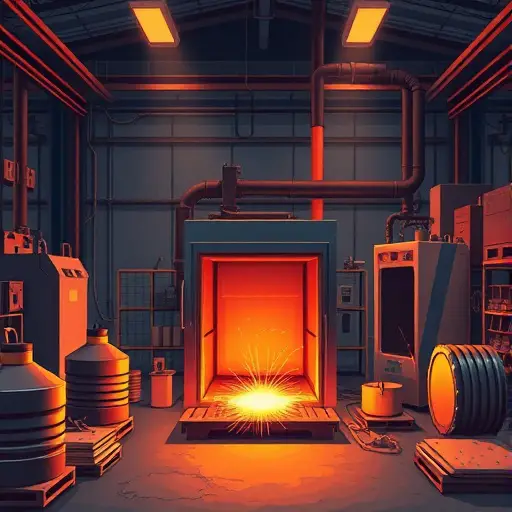
Innovations in engineering and design propel flux ovens toward smarter, more versatile tools for welding. Future models incorporate IoT connectivity, allowing remote monitoring of temperature and flux inventory via apps. Lightweight composites replace heavy steel in boxes, easing cart mobility without sacrificing durability. Advanced heating uses induction technology to target watts more precisely, reaching 550F faster while cutting energy use. For submerged arc welding, self-cleaning mechanisms prevent residue buildup, extending oven life. Manufacturers explore modular designs where 100 lb units stack into 200 lb equivalents, adapting to space constraints. Gullco and emerging brands integrate AI for predictive flux conditioning, adjusting based on environmental data. These changes enhance automation compatibility, syncing with welding machines seamlessly. Sustainability drives eco-friendly materials and recyclable components. Welders will benefit from ergonomic interfaces that reduce setup time. On a broader scale, these innovations address global manufacturing shifts, like lighter earth-moving equipment. Flux oven engineering evolves rapidly, promising devices that anticipate needs and elevate performance across industries.
Impact of Automation on Manufacturing
Automation profoundly impacts manufacturing through flux ovens, streamlining welding operations and amplifying output. Robotic systems pull flux from ovens at precise rates, feeding it into submerged arc welders without pauses, ideal for complex geometries. This shift reduces labor costs and errors, as feedback from ovens informs machine adjustments in real time. In large-scale production, automated flux handling via conveyors links 200 lb ovens to multiple stations, optimizing inventory flow. Manufacturers report up to 30% faster cycles, crucial for competitive edges. Brands like Gullco pioneer automation-ready ovens with standardized ports for easy integration. Diesel variants support mobile automated units in field manufacturing, like wind turbine assembly. Engineering focuses on seamless data exchange, where oven sensors predict flux depletion. Welders transition to supervisory roles, overseeing AI-driven processes. This evolution minimizes waste, from excess heating watts to unused flux. Globally, automation via flux ovens transforms sectors, from automotive to construction, fostering leaner, more responsive factories. The impact reshapes how manufacturers achieve precision at scale.
Sustainability Considerations in Flux Oven Use
Sustainability considerations shape the future of flux oven use, emphasizing energy efficiency and eco-conscious design in manufacturing. Low-watt models reduce electricity demands, aligning with green initiatives while maintaining 550F for flux heating. Recyclable materials in oven construction minimize environmental footprint, and some brands offer solar-compatible power options. In submerged arc welding, sustainable flux formulations pair with ovens that optimize drying to cut waste. Manufacturers track carbon emissions through integrated feedback, promoting accountable operations. Gullco leads with energy-star certified ovens, appealing to eco-focused clients. Automation integration further boosts sustainability by precise flux dosing, reducing overuse. Diesel models shift to biofuels, lowering emissions in remote sites. Engineering innovations include heat recovery systems that repurpose exhaust for shop warming. Welders adopt practices like batch heating to conserve resources. Inventory management prevents spoilage, extending flux life. These considerations not only comply with regulations but also enhance profitability through cost savings. Flux ovens evolve as sustainable allies, supporting manufacturing's push toward a greener earth without compromising weld quality or speed.