How NFPA and ISO Standards Shape Medical Gas Supply Systems in Hospitals
Understanding Medical Gas Supply Systems in Hospitals
Overview of Medical Gases Used in Healthcare
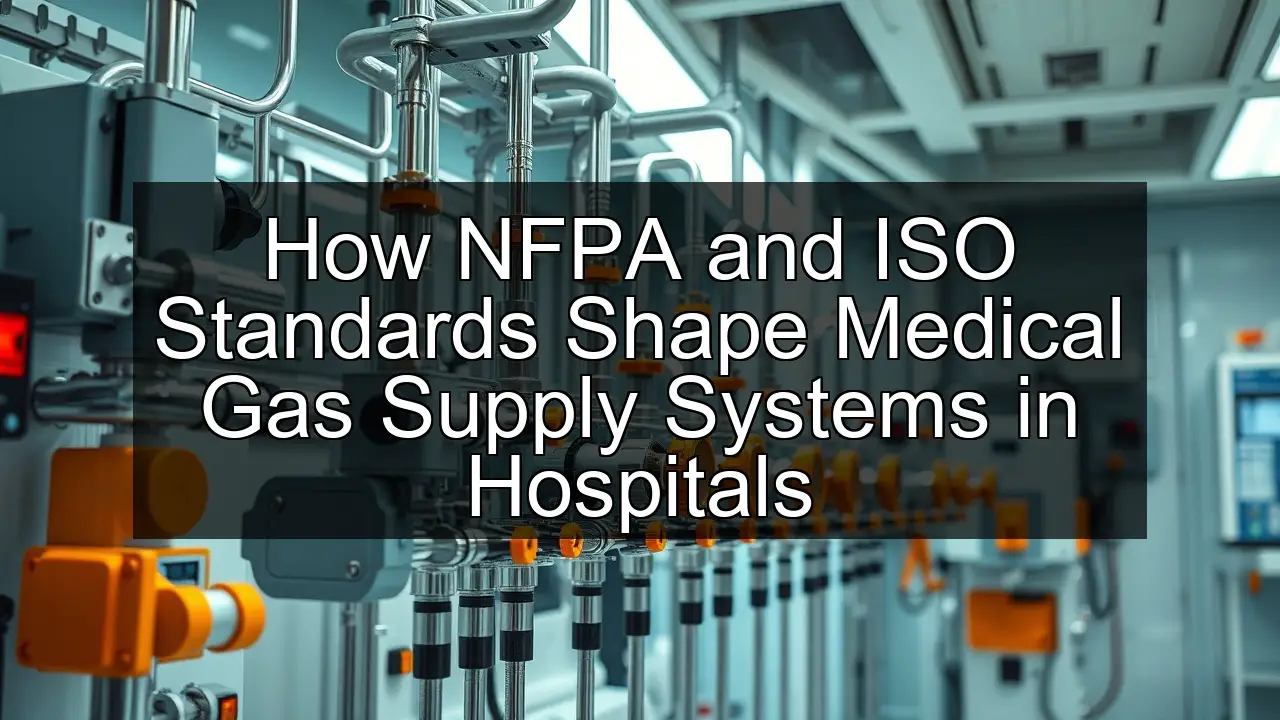
Medical gas supply systems in hospitals play a critical role in patient care, providing essential gases such as oxygen, nitrous oxide (N2O), and medical air. Oxygen, vital for respiratory support, is delivered from centralized systems or gas cylinders. Nitrous oxide serves as an anesthetic in various surgical procedures, while medical air, a mixture of gases, supports patients who require non-pressurized air. Hospitals also utilize gas for vacuum systems, essential in suction applications during surgery. Understanding these gases and their applications sets the foundation for recognizing the importance of effective medical gas supply systems within healthcare facilities.
Importance of Efficient Medical Gas Distribution
Efficient medical gas distribution ensures that healthcare providers can deliver timely and accurate treatment to patients. In emergencies, quick access to oxygen and other medical gases can be life-saving. An effective supply system minimizes downtime, reducing the risk of complications during surgeries or critical care situations. Moreover, a well-designed medical gas delivery system enhances the overall efficiency of hospital operations, allowing medical staff to focus on patient care rather than worrying about gas availability. Thus, the importance of a robust distribution system cannot be overstated, as it directly correlates to patient safety and the quality of care provided in hospitals.
Key Components of Medical Gas Supply Systems
Medical gas supply systems consist of several key components that work together to ensure seamless operation. At the heart of these systems are gas manifolds, which regulate and distribute the flow of gases from storage cylinders to various hospital areas. Piping systems transport gases through the facility, connecting manifolds to outlets located in patient rooms, operating rooms, and emergency departments. Additionally, cylinders serve as backup sources of gas, ensuring uninterrupted service during maintenance or emergencies. Other essential components include pressure regulators, flowmeters, and solenoids, which monitor and control gas flow, maintaining the required pressure and delivery rates. Together, these elements form a comprehensive medical gas supply system that prioritizes patient safety and operational efficiency.
Regulatory Standards: NFPA and ISO Influence
National Fire Protection Association (NFPA) Standards
The National Fire Protection Association (NFPA) establishes crucial standards that ensure the safety and efficiency of medical gas supply systems. NFPA 99, in particular, addresses the health care facilities' requirements for gas and vacuum systems, emphasizing the importance of proper installation, maintenance, and operational protocols. These standards help mitigate risks associated with gas leaks, fires, and explosions, which can have devastating consequences in a healthcare environment. Compliance with NFPA regulations not only protects patients and staff but also ensures that hospitals operate in a safe and efficient manner. Adhering to these standards is essential for maintaining the integrity of medical gas manifolds and the overall delivery system.
International Organization for Standardization (ISO) Guidelines
ISO guidelines further enhance the safety and quality of medical gas supply systems. ISO 7396-1, for instance, provides specifications for pipeline systems that transport medical gases, ensuring compatibility and safety across various components. These international standards outline best practices for the design, installation, and maintenance of medical gas systems, promoting uniformity and reliability worldwide. Compliance with ISO standards not only boosts patient safety but also fosters confidence among healthcare providers and regulators. By adhering to these guidelines, hospitals can achieve greater efficiency in their medical gas systems while meeting the strict manifold supply requirements set by governing bodies.
Impact of NEMA on Medical Gas Equipment Design
The National Electrical Manufacturers Association (NEMA) plays a significant role in influencing the design of medical gas equipment. NEMA standards ensure that devices such as medical gas manifolds, pressure regulators, and flowmeters meet rigorous safety and performance criteria. These guidelines focus on electrical safety, compatibility, and reliability to prevent failures that could jeopardize patient care. By prioritizing high-quality manufacturing and design principles, NEMA helps enhance the efficiency of medical gas systems in hospitals. Adhering to NEMA standards also assures healthcare providers that the equipment they use complies with industry best practices, ultimately contributing to improved patient outcomes and operational efficiency.
Design and Engineering of Medical Gas Manifolds
Types of Medical Gas Manifolds
Medical gas manifolds come in various types to meet the specific needs of healthcare facilities. Single-stage and dual-stage manifolds are among the most common, serving to regulate and distribute gases like oxygen and nitrous oxide. Single-stage manifolds are simpler and suitable for smaller facilities, while dual-stage manifolds provide greater reliability and efficiency for larger hospitals. Automatic switchover manifolds ensure a continuous supply by seamlessly transitioning from a primary to a backup gas source, minimizing downtime. Understanding the differences among these manifold types allows healthcare providers to select the most appropriate systems for their specific operational needs, ensuring efficient and safe gas delivery.
Complex Manifold Systems in Hospitals
Many hospitals employ complex manifold systems to manage their extensive medical gas supply needs. These systems often combine multiple manifolds to cater to various departments, ensuring that each area receives the required gases without interruption. The complexity arises from the necessity to balance the demands of different units, such as ICU, OR, and patient wards. Engineers design these systems to optimize efficiency while minimizing pressure loss and gas waste. Moreover, robust monitoring systems track gas levels and pressure, providing real-time data to staff. By investing in complex manifold systems, hospitals can ensure that they meet the high standards of care expected in modern healthcare environments.
Role of Piping and Pressure Regulation
Piping systems and pressure regulation play pivotal roles in the functionality of medical gas supply systems. The design of piping must account for the various gases transported, ensuring compatibility and safety throughout the hospital. Properly sized piping minimizes pressure drops and maximizes gas delivery efficiency. Pressure regulators are crucial in maintaining consistent flow rates and pressures, adapting to the demands of different devices and applications. Engineers must carefully select and design these components to work harmoniously, ensuring that medical gases are delivered reliably and safely. By focusing on these critical aspects, hospitals can enhance the efficiency and safety of their medical gas systems.
Ensuring Patient Safety and Efficiency in Medical Gas Systems
Safety Measures in Medical Gas Distribution
Safety measures are paramount in the distribution of medical gases within hospitals. First, proper labeling of gas outlets and equipment is essential to prevent mix-ups and ensure that healthcare staff quickly identify the correct gas source. Additionally, safety alarms and monitoring systems help detect leaks or pressure anomalies, allowing for immediate corrective actions. Routine inspections and maintenance of all components, including gas manifolds and piping, further enhance safety by ensuring all systems operate within established guidelines. Training staff on the proper use and handling of medical gases is also critical to preventing accidents. By implementing these safety measures, hospitals can significantly reduce the risks associated with medical gas distribution.
The Role of Flowmeters and Solenoids
Flowmeters and solenoids are integral to the efficient operation of medical gas systems. Flowmeters provide real-time measurements of gas flow, allowing healthcare providers to adjust delivery rates according to patient needs. These devices help ensure that patients receive the correct dosage of gases, especially in critical situations. Solenoids control the flow of gas within the system, acting as automated valves that open or close based on demand. Together, flowmeters and solenoids enhance the precision and reliability of medical gas delivery, gas medical manifold contributing to improved patient care. Regular maintenance and calibration of these devices are essential for sustained accuracy and safety in gas distribution.
Maintenance and Troubleshooting of Medical Gas Manifolds
Regular maintenance and troubleshooting of medical gas manifolds are crucial for ensuring their optimal performance. Hospitals should establish a routine inspection schedule to check for leaks, wear, and proper functioning of all components, including piping and pressure regulation systems. Staff must be trained to identify potential issues early, allowing for timely interventions. Troubleshooting procedures should include checking the integrity of gas cylinders, ensuring that connections are secure, and confirming that regulators and flowmeters are functioning correctly. By addressing maintenance proactively, hospitals can prevent disruptions in medical gas supply, thereby safeguarding patient safety and ensuring the efficiency of healthcare operations.